
Canada PR for 2 lakh temporary residents: who among Punjabis will benefit
 Aayush Goel
Published
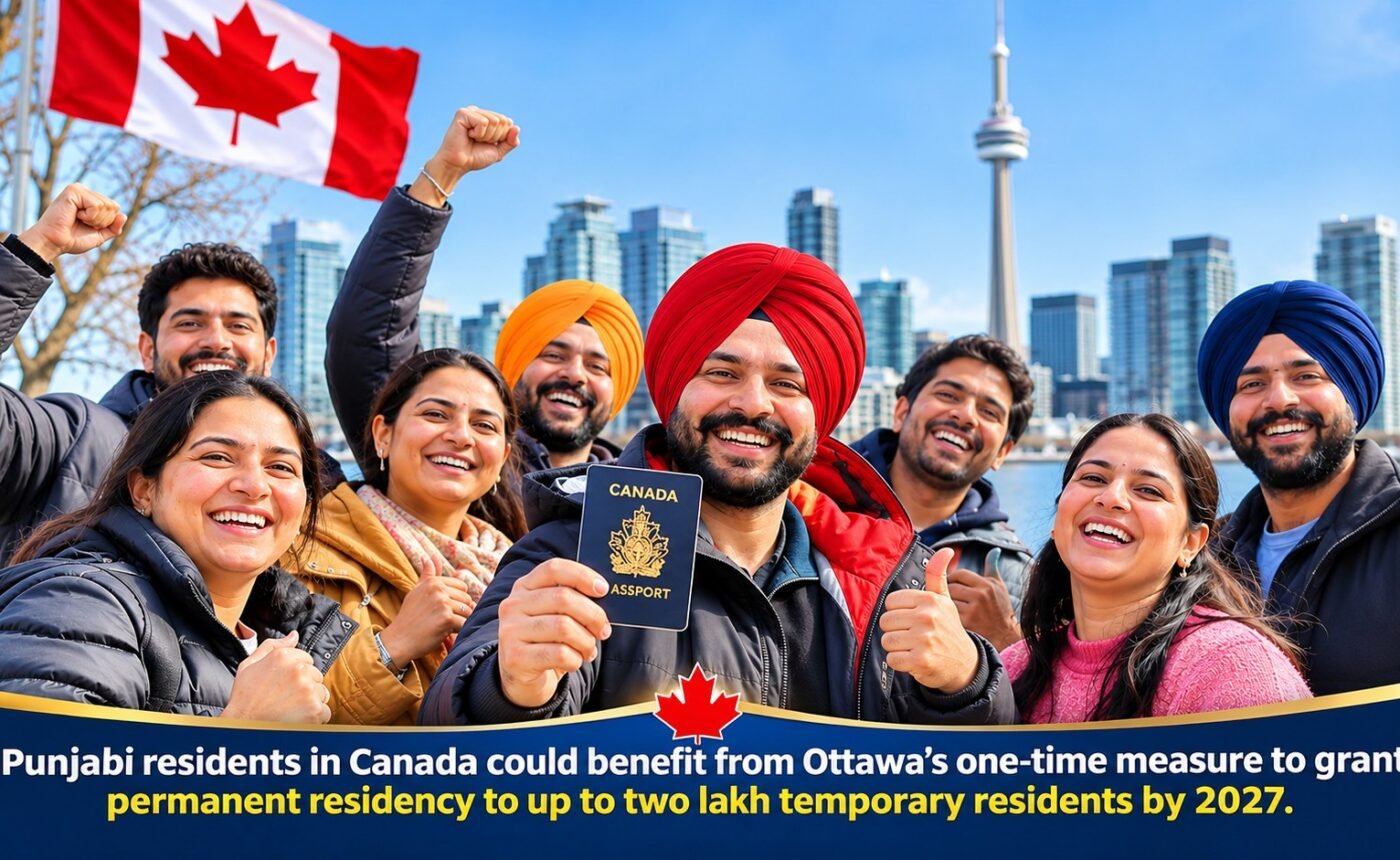
Chandigarh. Punjabi work permit holders who already have a PR file moving, and spouses whose sponsorship is pending inside Canada, are best placed to gain from Ottawa’s new one-time measure. Canada will grant permanent residency to up to two lakh people already living in the country by the end of 2027.
These places are on top of Canada’s regular target of 3.8 lakh new permanent residents a year. The measure was announced in Ottawa on November 5 with Canada’s Budget 2026 and its 2027-2029 Immigration Levels Plan.
But there is no new form and no portal. Immigration, Refugees and Citizenship Canada (IRCC) describes the measure as extra room to clear files under existing pathways, not a fresh call for applications.
“This is a drive to clear Canada’s pending files,” said KBS Sidhu, retired IAS officer, former Special Chief Secretary of Punjab and convener of the Shiromani Punjab Forum. He warned families in Punjab not to pay any agent who promises them a place under the scheme.
Two groups, one lakh each
Workers: Up to one lakh workers, with their families, will get PR. They must be eligible under Express Entry, Canada’s points-based system for skilled workers, or a Provincial Nominee Program (PNP), through which provinces choose the workers they need.
Ottawa will work with the provinces to pick these workers based on local job shortages. Provinces will get extra PNP nominations for this. They can also pick workers who have already applied under the Atlantic Immigration Program, the Start-up Visa Program, the Self-Employed Persons Program, the Agri-Food Pilot and home care worker programs.
Families and humanitarian cases: The second lakh is meant to clear old files. It covers pending applications from spouses, common-law partners and dependent children of Canadian citizens and PRs who are already living in Canada. It also includes leftover Hong Kong and Ukraine pathway files, and people already approved in principle on humanitarian grounds.
Outside Quebec, Ottawa wants the wait for in-Canada spousal PR to come down to about 12 months. Humanitarian and compassionate cases now show a wait of more than 10 years.
Who is unlikely to gain
The measure is only for people already in Canada. As announced, a spouse still living in Punjab and waiting on a sponsorship file is not covered by this group, and neither are students planning to go to Canada. Work permit holders who don’t qualify for Express Entry or a PNP, and who have no PR file under the listed programs, also fall outside the workers’ group. Detailed eligibility rules have not been released yet.
Why Canada is doing this
Ottawa wants temporary residents to make up less than 5 per cent of the population by the end of 2027. Statistics Canada put that share at 6.7 per cent on July 1, 2026, down from a peak of 7.6 per cent in October 2024. Giving PR to people already living and working in Canada lowers the share without forcing them to leave.
The pressure on the ground is real. IRCC data shows about 14 lakh temporary residents will see their permits expire in 2026.
Prime Minister Mark Carney defended the move. He said these are people who have worked “in the same firms, in the same communities, for years,” and whose employers renew their temporary permits every year.
Finance Minister François-Philippe Champagne said the pressure from temporary workers is not the same in every region. “Depending where you are, there’s more pressure, the unemployment rate is not the same,” he said at a media briefing before the budget.
The Opposition criticised the plan. Speaking in Brampton on November 6, Conservative leader Pierre Poilievre said Canada cannot absorb so many new permanent residents, and that numbers must match the jobs, health care and housing available. Conservative immigration critic Michelle Rempel Garner accused the government of setting intake numbers to suit big business at the cost of Canadian and newcomer workers.
What else changes for Punjabis
– Canada will admit 3.8 lakh permanent residents each year from 2027 to 2029. Counting the new measure, Canadian Press reports Canada could add more than six lakh new PRs next year.
– According to the plan’s detailed figures, Express Entry admissions fall to 1 lakh a year, from 1.11 lakh planned earlier.
– Provincial nominee admissions rise to 95,000 a year, from 92,500. The Atlantic Immigration Program rises to 6,000, from 4,000.
– Family sponsorship stays at 81,000 a year: 66,000 for spouses, partners and children, and 15,000 for parents and grandparents.
– New temporary arrivals stay at 3.7 lakh a year: 2.2 lakh workers and 1.5 lakh students. Post-graduation work permits are not counted in this figure.
– The Rural Community Immigration Pilot becomes permanent. Two earlier one-time measures continue: a fast track to PR for 33,000 workers in smaller communities, and PR for about 1.15 lakh protected persons.
The Punjab link
Indians make up about one in five temporary workers in Canada, according to IRCC data. Indians also received more Canadian PRs than any other nationality in recent years, about 1.38 lakh in 2023.
Sidhu’s own rough estimate is that 30,000 to 40,000 Indians could gain from the two lakh places. He stresses that this is not an official figure.
The measure comes two years after former international students, many of them from Punjab, camped for months beside a busy Brampton highway. As their post-graduation work permits ran out, they demanded a fair path to PR.
What families should do
– Check whether a PR application or an in-Canada spousal sponsorship is already pending. Those files are best placed.
– Don’t pay any agent for a “two lakh PR” form. No such form exists.
– Deal only with licensed lawyers, or consultants registered with the College of Immigration and Citizenship Consultants.
– Keep permits valid and papers ready, and watch the IRCC and provincial nominee program websites for eligibility rules.
Sidhu has urged the Punjab NRI Affairs Department to publish answers to common questions in Punjabi and English, together with the High Commission of Canada.



Comments