
Punjab stubble burning beats 2025 count as toxic smog grips Delhi-NCR
 The Standard Desk
Published
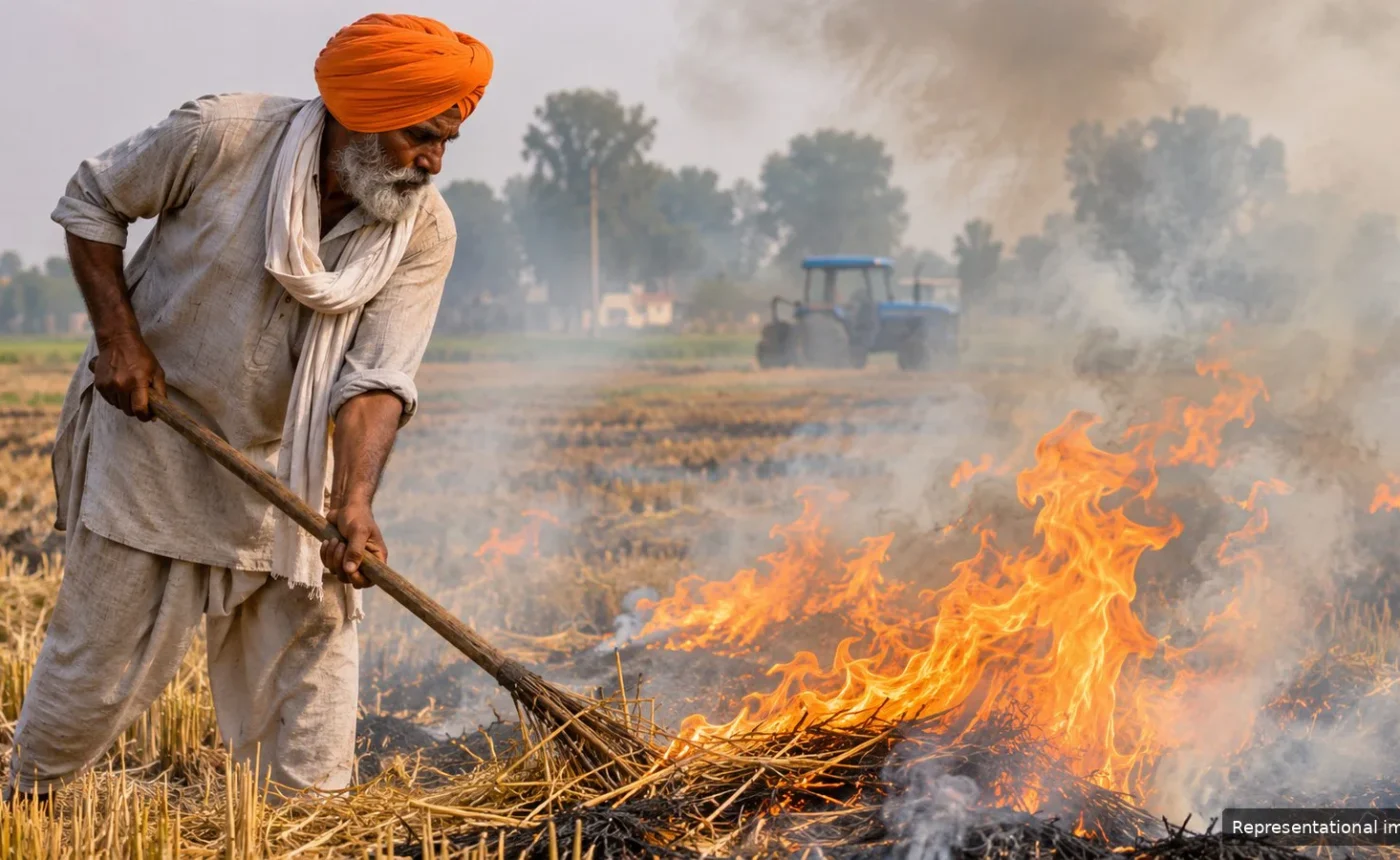
Chandigarh. Punjab has recorded 5,972 farm fires in just two months. That is 17% more than the 5,114 it recorded in the whole of 2025. Meanwhile, thick haze has kept Delhi and the National Capital Region under strict Stage III anti-pollution curbs since November 6.
But the crackdown has stopped short of officials. 1,607 nodal and supervisory officers have received show-cause or warning notices for failing to stop the fires, and not one has been suspended or chargesheeted. Cases have been started against only 35 supervisory officers under Section 14 of the Commission for Air Quality Management (CAQM) Act, 21 in Ferozepur and 13 in Tarn Taran.
Farmers have faced tougher action. Police have registered 1,829 FIRs against them under Section 223 of the Bharatiya Nyaya Sanhita (BNS), according to CAQM and Punjab Pollution Control Board (PPCB) data from September 15 to November 15. Fines of ₹1.12 crore have been imposed on 2,213 farmers, but only ₹49.55 lakh has been recovered. Revenue officials have made 2,348 “red entries” in land records. A red entry means the farmer cannot sell or mortgage the land or take a bank loan against it.
The smoke has added to the toxic air over the region. On November 14, 33 of Delhi’s 58 monitoring stations recorded “severe” air. A Centre for Science and Environment study found that farm fire smoke made up about 14% of Delhi’s pollution in early November. Vehicles and nearby NCR towns added more. On November 4, CAQM chairperson Rajesh Verma flagged the “very high” number of fires in Punjab.
The worst day was Diwali, November 8, when Punjab recorded 1,152 fires. That day Mandi Gobindgarh’s air quality index touched 445, in the “severe” category.
Ferozepur is the worst-hit district, with 817 fires, 420 farmers fined a total of ₹21 lakh and 303 FIRs. Tarn Taran has 700 fires and the most FIRs at 312. Sangrur, Chief Minister Bhagwant Mann’s home district, has 669 fires and 191 FIRs. Bathinda (528), Patiala (396) and Barnala (342) come next. Pathankot reported just one fire.
Action varies widely between districts. Bathinda fined only 63 farmers for 528 fires. Mansa fined 21 farmers for 219 fires, and Faridkot fined 30 for 221. Malerkotla, on the other hand, filed 148 FIRs against 158 fires.
Field teams checked 5,616 spots flagged by ISRO satellites and confirmed burning at 2,478. At 264 other fields they found only old burn marks. Paddy has been harvested on 98.38% of the state’s 32.87 lakh hectares, but two weeks of monitoring are still left.
“Paddy straw is not waste, it is a resource,” Agriculture Minister Gurmeet Singh Khudian told farmers in Gurdaspur on September 21, as he urged them to stop burning it.
The fine is ₹5,000 for each fire for farmers with less than two acres, ₹10,000 for two to five acres and ₹30,000 for more than five acres. Breaking a district magistrate’s ban under Section 163 of the BNS leads to an FIR under Section 223, which can mean jail and a further fine.



Comments